
 David Lash
7 Videos Manufacturers Need for Better B2B Leads
 David Lash : June 19, 2026, 9:21:41 AM EDT
Video marketing for manufacturers works best when each video has a clear job in the buyer journey. Here are 7 video types to turn views into leads.
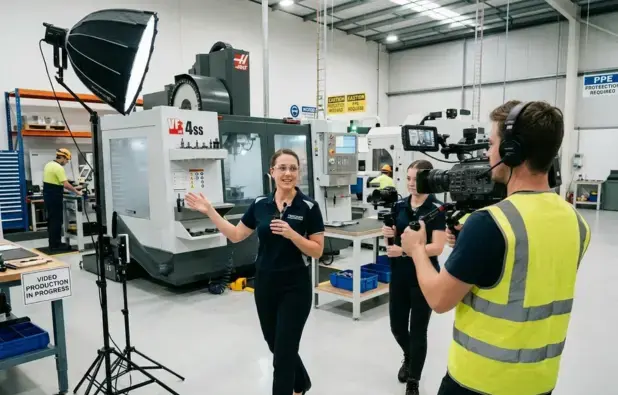
Manufacturers face a buyer who has already made up most of their mind before a salesperson ever gets a call. Industrial buyers now research specs, compare suppliers, and shortlist vendors almost entirely on their own — and video has become one of the fastest ways for a manufacturer to earn a spot on that shortlist. This guide covers how to plan, produce, distribute, and measure video content built specifically for manufacturing brands: from plant-floor product demos to the analytics that prove ROI to leadership.
If you want the foundational framework behind video strategy in general — goals, formats, production basics — start with our complete guide to building a video marketing strategy. This guide builds on that foundation and applies it specifically to manufacturing and industrial marketing.
Video marketing for manufacturers is the use of video content — product demonstrations, plant tours, technical explainers, customer case studies — to build brand awareness and generate qualified leads among industrial buyers, engineers, procurement teams, and distributors. Unlike consumer video marketing, it has to do double duty: make complex, technical products understandable to a non-expert stakeholder while still satisfying an engineer who wants to see real specs and real performance.
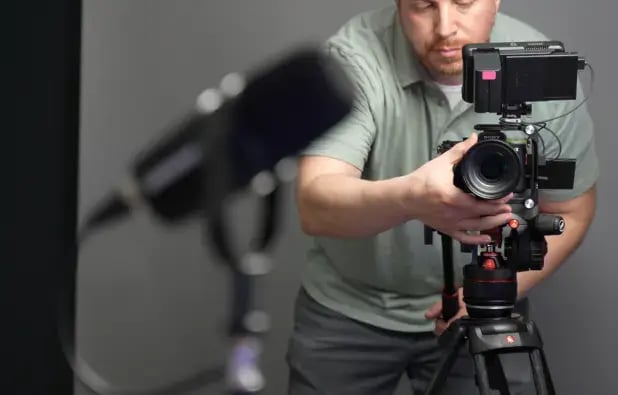
This is the part that's genuinely different from generic B2B video advice, and it's worth understanding before you plan a single shoot.
Buyers are deciding before they ever talk to you. More than half of industrial buyers make purchase decisions before ever interacting directly with a manufacturing company, and B2B buyers typically consume several pieces of content before they'll reach out to a salesperson. That means your video content is often doing the job a sales rep used to do: building trust and answering objections, long before a human conversation happens.
Manufacturing is inherently hard to explain in text. Complex machinery, tight tolerances, and multi-step production processes are difficult to communicate through a spec sheet or product page alone. Video lets a buyer watch a process, see a product in motion, and understand functionality in a way that a paragraph of copy can't replicate.
It's already outperforming other content types. A majority of industrial marketers surveyed said video produced their best content marketing results of the past year, and a large share of B2B marketers believe video content directly helps leads convert. For an industry where the average conversion rate hovers in the low single digits, that kind of lift is hard to ignore.
Trust matters more than ever in a self-directed buying environment. As more of the buying journey moves online and away from live sales conversations, the manufacturers who look transparent, credible, and easy to evaluate, largely through the quality and clarity of their content, tend to win the shortlist spot. Video, especially behind-the-scenes and process-transparency content, is one of the most efficient ways to build that trust at scale.
If you're starting from zero, resist the urge to jump straight to production. The manufacturers who see the best ROI treat video as a strategic asset tied to specific funnel stages and buyer roles, not a one-off project.
Manufacturing buying committees are rarely one person; they typically include an engineer or technical evaluator, a procurement or purchasing lead, and often a plant or operations manager. Each cares about something different: the engineer wants performance data, procurement wants total cost and reliability, and operations want to know how disruptive implementation will be. Your video content should map to these roles rather than speaking to a single generic "buyer."
Top-of-funnel video (brand story, plant culture, "who we are") builds awareness. Mid-funnel video (product demos, technical explainers) supports evaluation. Bottom-of-funnel video (customer case studies, ROI walkthroughs) helps close. Knowing which stage you're producing for changes everything about length, tone, and distribution.
Manufacturers typically invest a modest share of overall revenue in marketing compared to other industries, and video is often one of the pricier line items in that budget. Rather than one expensive annual video, many manufacturers get more mileage from a repeatable, lower-cost production cadence — shorter demo and explainer videos shot regularly — supplemented by one or two higher-production pieces per year (a brand anthem or major product launch).
This is where it's worth stepping back to the fundamentals like audience research, content mapping, and channel strategy, covered in depth in our video marketing strategy guide. Treat that framework as your foundation, then layer the manufacturer-specific decisions below on top of it.
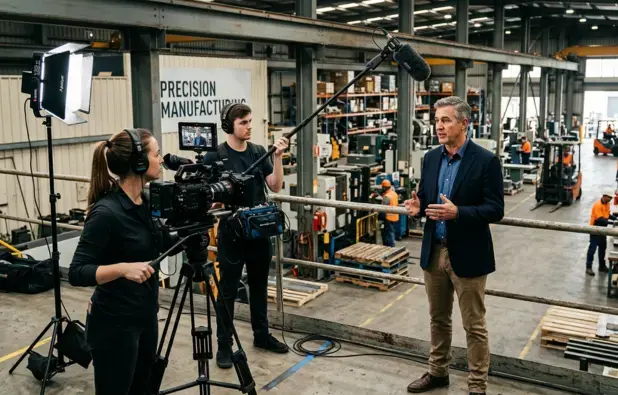
Not every video format earns its keep in an industrial sales cycle. These are the types that consistently perform for manufacturers specifically:
Product demonstrations - showing a product in action, ideally in a real or realistic operating environment, not just on a studio table. This is often the single most-requested video type by industrial buyers doing evaluation-stage research.
Plant and process tours - behind-the-scenes footage of your manufacturing process builds transparency and answers the "can this company actually deliver at scale?" question that procurement teams silently ask.
Technical explainers - short videos that break down a spec, a capability, or a common application question. These are especially valuable for AEO purposes, since they map directly to the kinds of specific questions buyers (and AI search tools) are asking.
Customer case studies and testimonials - a peer manufacturer or end customer testimonial describing results carries more credibility than any claim you make about yourself, particularly late in a long sales cycle.
Live demos and virtual walkthroughs - increasingly used as a lower-cost substitute for in-person plant visits and trade show demos, especially as travel and trade-show budgets get scrutinized more closely.
Distribution is where a lot of manufacturers' video strategies quietly fail, not because the content is bad, but because it's placed where consumer audiences live instead of where industrial buyers actually research.
Your website and product/spec pages - this is non-negotiable. Buyers doing evaluation-stage research expect to find demo and explainer videos directly alongside the technical content they're already reading, not buried on a separate "media" page.
LinkedIn - the dominant organic and paid social channel for industrial marketers, by a wide margin, and the platform where the engineers and purchasing leads on a buying committee are most likely to be active professionally.
Industrial directories - buyers use supplier directories as a primary evaluation tool, and profiles with video consistently see stronger engagement on RFI and RFQ submissions than those without.
Trade publications and industry-specific outlets - still a credible, trusted source for many technical buyers, even as more research moves online.
Email - manufacturing email open rates are notably strong compared to other industries, making it a reliable channel for pushing new video content to an existing list of prospects and customers.
Notice what's missing: broad consumer platforms like TikTok or Instagram Reels rarely make sense as a primary channel here. They're not where your buying committee is doing research, even if they occasionally have a role in broader brand awareness.
Views and watch time are fine vanity metrics, but they won't hold up in a budget conversation with leadership. Tie video performance to the metrics that actually matter in an industrial sales cycle:
RFQ and RFI submissions influenced by video-viewing behavior (e.g., did a prospect watch a demo before submitting a quote request?)
Spec sheet and technical document downloads that follow a video view are a strong signal of evaluation-stage intent
Sales cycle length for leads who engaged with video versus those who didn't
Conversion rate on pages with embedded video versus equivalent pages without it
Engagement on directory and social profiles where video is present, particularly on platforms like ThomasNet or LinkedIn
Set these up before you launch a video, not after; it's the only way to isolate a video's actual contribution instead of guessing after the fact.
Video has quickly become table stakes for winning the trust of a self-directed, technically demanding buyer before they ever pick up the phone. The manufacturers who treat it as a strategic, funnel-mapped part of their marketing are the ones seeing it show up in RFQs, shorter sales cycles, and stronger brand recognition across their industry. Ready to build a video strategy tailored to your manufacturing brand? Contact our team to talk through where video fits into your marketing plan.

 David Lash : June 19, 2026, 9:21:41 AM EDT
Video marketing for manufacturers works best when each video has a clear job in the buyer journey. Here are 7 video types to turn views into leads.
.png) David Lash : May 5, 2026, 4:07:53 PM EDT
David Lash : May 5, 2026, 4:07:53 PM EDT
Inbound marketing services align sales and marketing teams by creating shared lead definitions, automated handoff workflows, and unified KPI...

 Mark Parent : August 7, 2026, 10:12:00 AM EDT
Learn how to create sales enablement videos that clarify complex offers, build buyer trust, and help sales teams move qualified opportunities forward.