
 David Lash
7 Ways Video Production Boosts Inbound Campaign ROI
 David Lash : May 5, 2026, 4:07:53 PM EDT
Inbound marketing services align sales and marketing teams by creating shared lead definitions, automated handoff workflows, and unified KPI...

Marketing leaders are under more pressure than ever to prove that content spending translates to pipeline. Yet for most B2B teams, marketing video production remains one of the hardest line items to defend; not because the results aren't there, but because the measurement infrastructure isn't.
This guide breaks down exactly how to connect your video assets to inbound KPIs that revenue teams care about: lead volume, conversion rates, sales cycle velocity, and pipeline ROI. Whether you're building your first video attribution model or refining an existing reporting framework, you'll find the KPIs, attribution methods, and reporting templates you need to make the case and improve performance along the way.
Marketing video production directly impacts inbound KPIs by accelerating lead generation, improving content engagement rates, and shortening the B2B sales cycle. Organizations that tie video assets to specific funnel stages: awareness, consideration, and decision, consistently see higher conversion rates, more qualified MQLs, and stronger pipeline contribution from content marketing.
The challenge isn't producing video. It's connecting production investment to measurable inbound outcomes in a language revenue teams understand.
Despite the proven value of video in content marketing strategy, most B2B teams can't demonstrate its business impact. Common barriers include:
Fragmented attribution models that don't capture video touchpoints across long buying cycles
Vanity metrics (views, likes) that don't connect to pipeline or revenue
Siloed reporting between content, demand gen, and sales
Inconsistent tagging of video assets in marketing automation platforms
Without a structured measurement framework, marketing video production becomes a cost center instead of a growth lever.
To measure marketing video production accurately, you need an attribution model designed for long B2B buying journeys — typically 6 to 18 months with multiple touchpoints.
Recommended Attribution Models for Video in Inbound Campaigns
For most B2B teams, linear multi-touch or time-decay attribution provides the most actionable view of how marketing video production contributes to campaign performance measurement across a complex buyer journey.
Definition: The number of leads who engaged with at least one video asset before converting.
How to measure it:
Tag all video content in your CRM or marketing automation platform (HubSpot, Adobe Marketo, Salesforce)
Create a "video touchpoint" field that fires when a contact views a tracked video
Filter inbound leads by contacts with at least one video interaction in their activity timeline
Benchmark target: 30–50% of inbound leads should have a video touchpoint if video is embedded in key landing pages and nurture sequences.
Definition: The percentage of viewers who watch a meaningful portion of a video (typically 50%+), segmented by buyer journey stage.
How to measure it:
Use Wistia, Vidyard, or YouTube Analytics to extract watch-through rates
Segment by video type: awareness (thought leadership, brand), consideration (product walkthroughs, use cases), decision (demos, testimonials)
Map engagement rate benchmarks per stage
Benchmark targets by stage:
Low watch rates signal a content-audience mismatch or a video quality issue, both of which are solvable through production strategy adjustments.
Definition: The conversion rate of landing pages or lead nurture emails that include video, compared to non-video equivalents.
How to measure it:
A/B test video vs. non-video versions of key conversion pages
Segment email click-through rate for campaigns with video thumbnails vs. static assets
Report as lift percentage: (video conversion rate − baseline) / baseline × 100
Benchmark: Video on landing pages has been shown to increase conversions by up to 80%, depending on industry, offer type, and video quality, according to Insivia Technologies. Start with your own baseline and track improvement quarter-over-quarter.
Definition: Average number of days from first touch to closed-won, comparing opportunities where the contact engaged with video versus those who did not.
How to measure it:
In your CRM, create an opportunity segment: "Video-engaged contact" (any video touchpoint in activity history)
Compare average sales cycle length across video-engaged vs. non-video-engaged cohorts
Report monthly to show acceleration trends
Why it matters: Shorter sales cycles from video-engaged contacts directly validate marketing video production investment to CFOs and revenue leaders.
Definition: The percentage of Marketing Qualified Leads (MQLs) sourced from video-driven campaigns that advance to Sales Qualified Lead (SQL) status.
How to measure it:
Tag MQL source in your CRM at the campaign level (e.g., "video-gated-webinar," "video-nurture-sequence")
Pull MQL→SQL conversion rates by source monthly
Compare video-sourced MQL quality against other content formats (whitepapers, blog posts, paid)
High MQL-to-SQL rates from video content indicate that marketing video production is attracting and educating the right audience before they reach sales.
Definition: Total marketing video production spend divided by the total pipeline value of video-influenced opportunities.
Formula: Video Production Cost ÷ Total Pipeline Value (Video-Influenced) = Cost per Pipeline Dollar
How to measure it:
Track total investment: production agency fees, in-house team time, platform costs (Wistia, Vidyard), distribution spend
Pull pipeline value from video-influenced opportunities in your CRM
Calculate quarterly and compare against other content investment categories
This is the metric that bridges marketing video production to revenue team conversations.
Use this reporting structure to communicate video impact to marketing leadership and revenue stakeholders on a monthly or quarterly cadence.
Section 1: Lead Generation with Video
Total inbound leads this period: ___
Leads with at least one video touchpoint: ___ (___%)
New MQLs from video-gated content: ___
MQL-to-SQL conversion rate (video-sourced): ___%
Section 2: Engagement & Campaign Performance Measurement
Total video views: ___
Average watch-through rate by stage: Awareness ___% | Consideration ___% | Decision ___%
Top 3 performing videos by leads influenced: [Video Title, Leads]
Video-assisted landing page conversion lift vs. baseline: ___%
Section 3: Pipeline & Revenue Attribution
Open pipeline with video-engaged contacts: $___
Closed-won revenue (video-influenced): $___
Average sales cycle: Video-engaged ___ days vs. Non-video ___ days
Cost per video-influenced pipeline dollar: $___
Section 4: Production Investment Summary
Total video production spend this period: $___
Number of net-new videos published: ___
Content refreshes/repurposed assets: ___
Projected pipeline ROI: ___x

Effective inbound marketing performance measurement requires aligning video assets to specific buyer journey stages and tracking the right KPIs at each stage.
Goal: Reach in-market buyers before they self-identify.
Video types: Thought leadership interviews, industry trend reports, educational explainers, and podcast-style content.
KPIs to track:
Organic video impressions and reach
First-touch lead attribution from video
Brand search lift after video campaign launches
New visitor sessions from video-embedded blog posts
Content marketing strategy tip: Publish awareness videos natively on LinkedIn with closed captions. B2B buyers scroll LinkedIn before Google — native video generates up to 5x more engagement than text posts, according to Digital Applied.
Goal: Move known leads through active evaluation faster.
Video types: Product walkthroughs, use case showcases, comparison videos, and customer stories at the category level.
KPIs to track:
Email click-through rate lift (video thumbnail vs. static)
Time-on-page for video-embedded solution pages
Repeat video views per contact (signals active research)
Lead scoring point accumulation from video engagement
Content marketing strategy tip: Gate longer-form consideration videos (10+ minutes) behind a form. Use short teasers (60–90 seconds) ungated to drive form completions. Vidyard and Wistia allow in-video CTAs and lead capture without a hard gate.
Goal: Equip prospects with the confidence to buy and make it easy for sales to close.
Video types: Customer testimonials, ROI calculators with video narration, personalized video outreach, implementation overviews, and executive sponsor messages.
KPIs to track:
Demo request rate from decision-stage video views
Opportunity-to-close rate (video-engaged vs. not)
Sales cycle velocity delta
Video shares between buyer contacts (signals buying committee expansion)
Content marketing strategy tip: Give sales a library of short (2–3 minute) decision-stage videos they can send via Vidyard or Loom in outreach sequences. Track open and view rates at the contact level to surface engaged opportunities for faster follow-up.
To measure marketing video production impact accurately, your tech stack needs to support video event tracking end-to-end.
Select a platform that integrates natively with your CRM and marketing automation:
Wistia: Best for B2B inbound; native HubSpot/Marketo integration, Turnstile email capture, heatmaps
Vidyard: Best for sales-assisted video and personalized outreach; deep Salesforce integration
Vimeo Business: Strong for quality/brand-focused teams; lighter CRM integration than Wistia or Vidyard
YouTube: Best for organic search reach (SEO); limited lead-level tracking without overlay tools
Recommendation for B2B inbound: Host gated and nurture content on Wistia or Vidyard for lead tracking; simultaneously publish awareness content to YouTube and LinkedIn for organic reach.
Every video distribution link should carry UTM parameters:
This enables campaign performance measurement at the video level inside Google Analytics 4 and your CRM without relying solely on the video platform's native reporting.
In Google Analytics 4, create custom events for:
video_start — triggered at 0% watch
video_25_percent — triggered at 25% watch
video_50_percent — triggered at 50% watch (your primary engagement milestone)
video_complete — triggered at 90–100% watch
Map these events to conversion goals in GA4 to include video engagement in your channel attribution reports alongside paid, organic, and email.
In HubSpot or Marketo, use the Wistia or Vidyard integration to:
Add a contact property: "Last video viewed" (title + date)
Create a lead scoring rule: +5 points per video view >50% completion
Build a "Video-engaged" smart list for sales alerts and personalized follow-up
Trigger nurture sequences based on video topic (e.g., watched pricing video → trigger sales alert)
Mistake 1: Measuring views instead of engagement. Views alone don't indicate intent. A 100% completion rate on a 5-minute product walkthrough signals far more buying intent than 10,000 passive YouTube views.
Mistake 2: Not tracking video across the full attribution path. If a prospect watches a video in Month 1 and converts in Month 6, that video still influenced the deal. Use multi-touch attribution and set a 180-day lookback window to capture this.
Mistake 3: Treating all videos the same in reporting. A 30-second brand ad and a 15-minute customer success story serve different purposes and shouldn't share the same KPI benchmarks. Segment reporting by video type and funnel stage.
Mistake 4: Not involving sales in video performance reviews. Sales can tell you which videos prospects mention in calls, which assets they share with buying committees, and which topics trigger objection-handling conversations. Monthly sales feedback loops improve both production strategy and measurement accuracy.
Mistake 5: Ignoring the production quality signal. Watch-through rate is a proxy for production quality and content relevance. Consistently low watch-through rates aren't a distribution problem — they're a content or quality problem. Track this metric per production vendor or internal team to calibrate investment.
Use these questions in quarterly business reviews (QBRs) with marketing and revenue leadership to evaluate marketing video production performance:
Which video assets drove the highest MQL volume this quarter, and what topics/formats do they share?
What is the average sales cycle for video-engaged opportunities versus the overall pipeline
Which decision-stage videos are sales reps using most, and are they tracking views post-send
What is the pipeline ROI on video production investment this quarter? How does it compare to other content investments?
Are there stages of the buyer journey where we lack strong video coverage?
Which video topics generate the most repeat views, and what does that tell us about buyer concerns we haven't fully addressed?
Tie every video asset to a specific buyer journey stage and a corresponding KPI: awareness, consideration, or decision metrics are not interchangeable.
Use multi-touch attribution with a 90–180 day lookback window to avoid undercounting video's influence on long B2B sales cycles.
The six core KPIs to report on are: video-influenced lead volume, engagement rate by stage, video-assisted conversion rate, sales cycle velocity, MQL-to-SQL rate by content type, and cost per video-influenced pipeline dollar.
Build the technical infrastructure first: consistent UTM tagging, GA4 video events, and CRM integration are prerequisites for credible measurement.
Report video performance in the pipeline and revenue language, not view counts. CFOs and CROs respond to pipeline ROI and sales cycle acceleration data.
Run quarterly feedback loops with sales to align production investment with actual buyer behavior in the field.
Marketing video production is a measurable growth driver when measurement is built into the content strategy from the start, not added as an afterthought after production is complete.
Getting the measurement right is only half the equation. The other half is making sure your video content is built with strategy and intention from the start — because assets that aren't designed for the buyer journey don't produce the KPIs this guide covers.
If you're looking to go deeper on how to structure that strategy before the camera rolls, take a look at our video marketing strategy guide as a practical next step. And if you're exploring what professional video production looks like as part of a broader inbound program, you can learn more about Studio 281 and Inbound 281's video services or explore how our full-service marketing solutions connect video to the campaigns and attribution infrastructure that make measurement possible.

.png) David Lash : May 5, 2026, 4:07:53 PM EDT
David Lash : May 5, 2026, 4:07:53 PM EDT
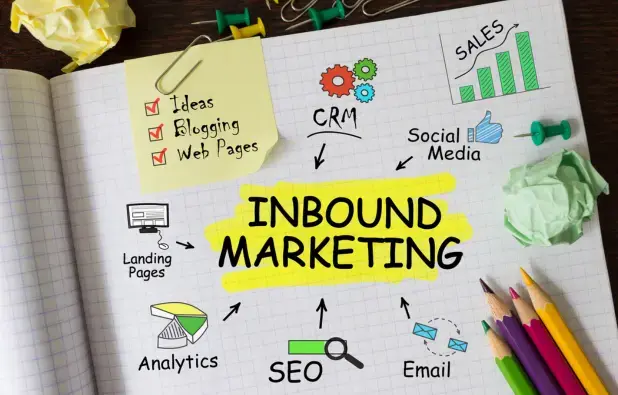
Inbound marketing services align sales and marketing teams by creating shared lead definitions, automated handoff workflows, and unified KPI...
 Alexis Jahlas : May 1, 2026, 9:15:00 AM EDT
Inbound marketing services help B2B manufacturers with long sales cycles attract better-fit prospects, improve lead quality, and build full-funnel...
 David Lash : September 25, 2026, 8:47:00 AM EDT
See how marketing video production improves inbound marketing campaigns, boosting engagement, nurturing efficiency, and lead quality at every stage.