
7 Videos Manufacturers Need for Better B2B Leads
 David Lash : June 19, 2026, 9:21:41 AM EDT
Video marketing for manufacturers works best when each video has a clear job in the buyer journey. Here are 7 video types to turn views into leads.
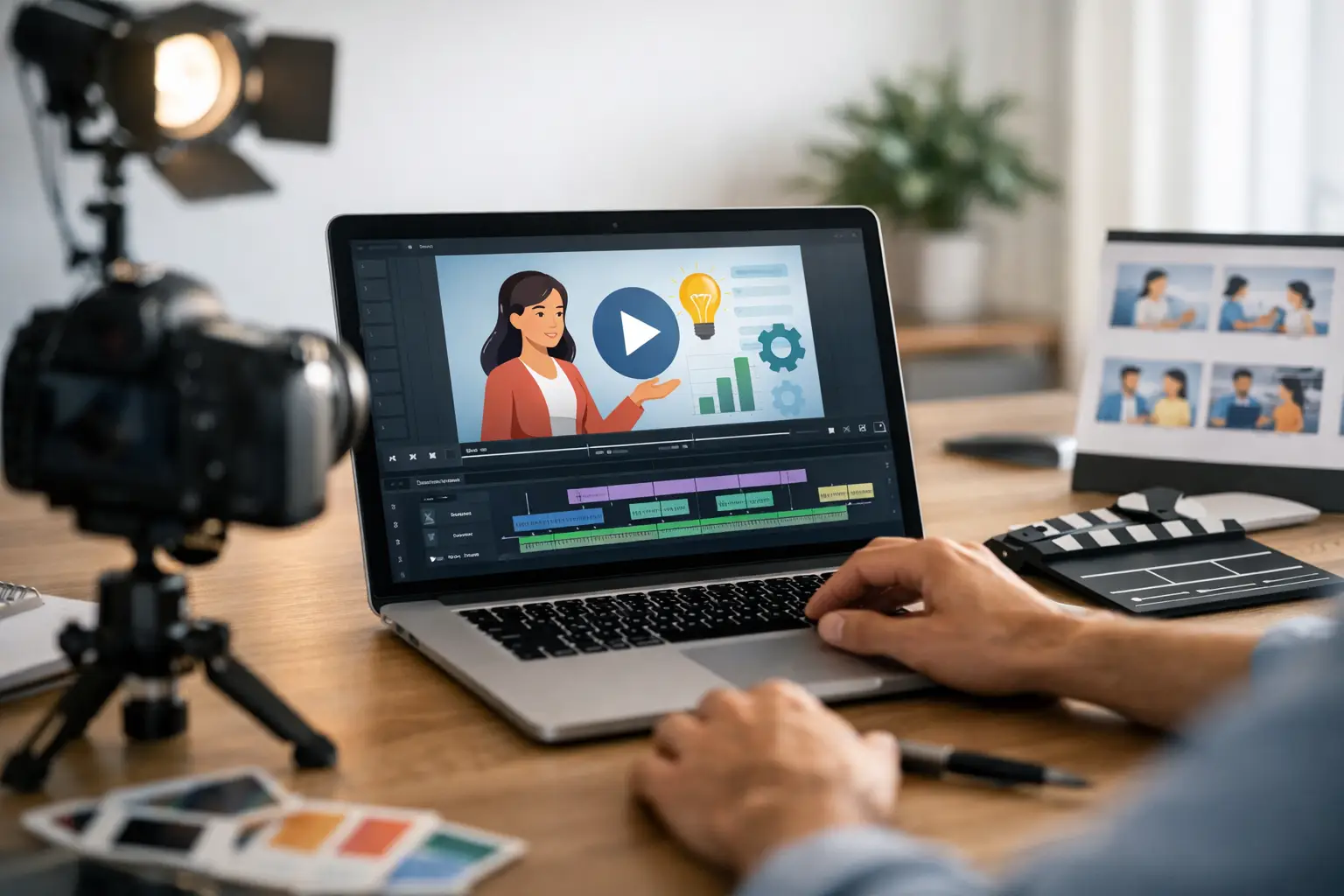
A prospect lands on your website, hears a sales rep describe your offering, and still asks, “So what exactly do you do?” That gap is where video can earn its place. Understanding what makes a good explainer video is less about impressive motion graphics or expensive equipment and more about giving the right buyer a clear reason to keep moving forward.
For B2B companies, manufacturers, nonprofits, and growing service organizations, an explainer video has a practical job: reduce confusion, build confidence, and make the next step feel worthwhile. If it cannot do one of those things, it may look polished without contributing much to revenue, lead quality, or sales efficiency.
The most common mistake is treating an explainer video as a broad introduction to everything the company offers. When teams try to cover every capability, product feature, differentiator, audience, and service line in two minutes, the result is usually vague. Viewers leave with activity, not understanding.
Start by defining the single question the video needs to answer. It might be, “How does this process reduce downtime?” “Why should a prospect change suppliers?” or “What happens after a donor gives?” That question should connect to a specific business goal, such as increasing qualified demo requests, shortening onboarding, helping sales explain a technical solution, or reducing repetitive customer service questions.
The right objective also depends on where the viewer is in the buyer journey. A homepage video may need to establish the problem and your point of view quickly. A product-page video can spend more time showing how the solution works. A sales follow-up video may address objections that are slowing an active opportunity. One video rarely performs all three jobs equally well.
Clarity is the standard that matters most. A viewer should understand who the video is for, what problem it addresses, how the solution works, and why the outcome matters. That does not require simplifying a sophisticated product until it feels generic. It means choosing language and examples that make the complexity easier to follow.
For example, a manufacturer may be proud of a proprietary process, materials expertise, and decades of production experience. Those details can strengthen a sales conversation, but they should not lead the story. Begin with the operational consequence the buyer recognizes: fewer quality issues, a faster turnaround, safer production, or a more reliable supply chain. Then show how your approach produces that result.
A strong script follows a logical progression. It identifies a recognizable challenge, introduces a better path, shows enough of the process or product to make the claim credible, and ends with a relevant next action. The wording should sound like a helpful expert, not a brochure read aloud.
Internal teams often rely on terms that make perfect sense inside the organization but mean little to a first-time visitor. Technical language is not automatically a problem, particularly in engineering, healthcare, software, or industrial markets. The issue is whether the video gives viewers context before asking them to understand specialized terms.
Interview salespeople, customer service teams, and current customers before scripting. They can reveal the phrases buyers use when describing the problem, the objections they raise, and the outcomes they care about. That research produces a message that feels relevant rather than rehearsed.
Video is valuable because it can show what words alone struggle to communicate. A machine in operation, a product being installed, a customer using a portal, or a side-by-side comparison can remove uncertainty quickly. The visual plan should support the message at every point.
That does not mean every explainer needs live-action footage. Animation can be the better choice when the subject involves software workflows, invisible data movement, a future-state process, or concepts that cannot be filmed safely or affordably. A hybrid approach can work well when real people and facilities establish trust while simple graphics clarify steps, timelines, or results.
The trade-off is credibility versus abstraction. Live action tends to feel tangible and human, but it requires planning around locations, lighting, employees, safety rules, and production schedules. Animation gives greater control, but generic icons and stock-style scenes can make a distinctive offer feel interchangeable. Choose the format that best helps your audience understand and believe the message.
A good explainer video gives viewers reasons to trust its claims. That proof may include a real process demonstration, a customer scenario, a measurable outcome, an expert speaking plainly, or an on-screen explanation of a key differentiator. Specificity carries more weight than broad claims such as “industry-leading” or “best-in-class.”
If your sales cycle depends on trust, feature real employees whenever possible. Buyers want to see the people who understand their challenges and will be accountable after the contract is signed. For organizations with complex offerings, a subject matter expert can add authority without turning the video into a lecture. Careful scripting and editing keep the explanation focused.
An explainer video should respect the viewer's time. For a general overview, 60 to 120 seconds is often enough. A technical product demonstration, customer onboarding video, or sales enablement asset may need three to five minutes because the viewer has a stronger reason to pay attention.
Length is not the real issue. Unnecessary time is. Every scene should either clarify the problem, explain the solution, substantiate a claim, or move the viewer toward action. If a segment does none of those things, it should be revised or removed.
Audio quality deserves the same attention as the visuals. Poor sound makes a professional company feel less credible within seconds. Clear voiceover, natural interview audio, readable captions, and music that supports rather than competes with the message all improve comprehension. Captions are especially useful because many viewers watch on mobile devices or begin with the sound off.
A video can create interest and still fail to create momentum if it ends without direction. The call to action should match the viewer's level of intent. Someone watching a broad awareness video may be ready to explore a related guide, see a case study, or visit a service page. Someone viewing a detailed solution video may be ready to request a consultation, schedule a demo, or contact a specialist.
Avoid forcing every viewer toward a meeting. A high-commitment call to action can be effective on a product or pricing page, but it may be too aggressive for an early-stage visitor. Give people a useful path forward, then make sure the surrounding webpage, landing page, and follow-up process support that path.
This is where connected marketing systems matter. Video performance should not stop at view count. When possible, track whether viewers take the next action, become known contacts, enter a nurture sequence, engage with sales, or influence an opportunity. A video that receives fewer views but helps sales create better conversations can be more valuable than a high-view asset with no measurable movement.
Good outcomes are usually decided during pre-production. Before filming, align stakeholders on the audience, message, proof points, brand standards, approval process, locations, speakers, and distribution plan. This prevents a common late-stage problem: multiple leaders adding competing messages after the story has already been built.
It also helps to plan for more than one deliverable. A primary explainer can be adapted into shorter clips for social media, sales outreach, email campaigns, recruitment, trade shows, and website sections. Those versions should be designed intentionally, not treated as random leftovers from the final edit. Vertical clips, square formats, captioned excerpts, and focused topic cuts can extend the value of a production without diluting the core story.
View count can provide useful context, but it is not a performance verdict. Look at engagement rate, average watch time, click-through behavior, conversion rate on pages with video, influenced pipeline, and feedback from sales conversations. The right metrics depend on the objective established at the start.
If viewers leave early, the opening may not be relevant enough, or the pacing may be slow. If they watch but do not take action, the call to action or page experience may need work. If salespeople do not use the asset, the message may not address the questions prospects actually ask. These are practical signals for improvement, not reasons to abandon video.
The best explainer video is not the one with the flashiest edit. It is the one that helps a real buyer understand a meaningful problem, see a credible solution, and take a sensible next step. When that happens, video becomes more than a brand asset. It becomes a working part of your marketing, sales, and customer experience.
Looking for a trusted partner in video to help create your next explainer series? Inbound 281 helps with video from start to finish and can build full campaigns around it. From first script to final edit and distribution, we can help you create video that builds trust and guides prospects to the next step. Contact our team to set up a discovery call and see how we can build video into your strategy.

 David Lash : June 19, 2026, 9:21:41 AM EDT
Video marketing for manufacturers works best when each video has a clear job in the buyer journey. Here are 7 video types to turn views into leads.

 Mark Parent : September 28, 2026, 9:14:59 AM EDT
Use this top video preproduction checklist to align goals, messaging, people, budgets, and production details before cameras roll with total clarity.
 Mark Parent : September 1, 2026, 9:33:00 AM EDT
Learn how to plan a corporate video campaign that supports sales, builds trust, and turns video views into qualified conversations and measurable...